Chinese-Assembled Toyota Engines: Lifespan, Problems, and Imports
Toyota engines remain highly sought after in the European secondary market and B2B sector: automotive businesses, service centers, and industrial distributors across Estonia—from Harju County to the industrial hubs of Ida-Virumaa—are constantly seeking reliable sources for contract engines. However, western procurement standards demand more than just competitive pricing; they require strict Supply Chain Compliance, transparent origin tracing, and verified ECU compatibility. Technical engine search and selection must be based on hard facts: Toyota operates advanced joint ventures in China (GAC Toyota, FAW Toyota) that adhere strictly to the global Toyota Production System. ChinaCar.pw bridges the gap for European buyers by offering a direct access procurement model that eliminates middleman risks. We provide a transparent, end-to-end supply chain for industrial cities like Tallinn, Tartu, and Narva, ensuring that every long block or short block undergoes rigorous Factory Acceptance Testing (FAT) before export.
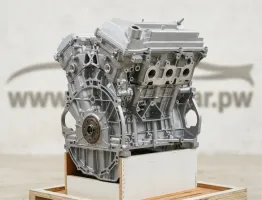
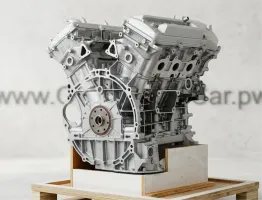
Fig 1. Instrumental inspection of a contract Toyota engine: FAT control of markings and peripherals before EU dispatch.
Are Chinese-Assembled Toyota Engines Reliable for the EU Market?
Yes, provided they originate from official manufacturing plants (GAC/FAW). The core engine block (OEM) shares the exact lifespan and metallurgical standards as its Japanese counterparts. The actual risks lie entirely within the secondary market: substandard overhauls, localized peripheral sensors, ECU firmware incompatibilities, and thermal damage from cheap coolants. Successful global procurement requires strict Supply Chain Compliance and physical FAT inspection prior to any financial transaction.
Localization Specifics and Assembly Risks
A common misconception within the European automotive aftermarket is automatically equating Chinese localization with a critical reduction in operational lifespan. In reality, for official Toyota assembly lines, this is a gross oversimplification, as the baseline metallurgical standards and block machining tolerances remain identical to global benchmarks. The risk zone shifts to the "secondary circuit," which includes localized peripheral components, plastic cooling system pipes, thermostat housings, ignition coils, and sealing elements. On paper, a contract motor might appear fully compatible with your European-spec vehicle, but these exact components are often the first to fail under age-related stress or aggressive thermal cycles. Furthermore, EU importers must clearly distinguish between original domestic-market units and rebuilt "Frankenstein" engines assembled by local workshops using aftermarket Toyota spare parts. Therefore, when engaging in B2B engine procurement, the focus must shift from the geographical location of the factory to the specific origin of the unit, its service history, and the exactness of its electronic calibrations.
Cooling System & Sealing
Prolonged operation on low-quality coolant leads to the deformation of mating surfaces. Overheating is the most expensive cause of future overhauls, directly compromising cylinder head gaskets and the overall thermal management of the unit.
Electronics & ECU Calibration
Even a mechanically sound engine will trigger multiple Diagnostic Trouble Codes (DTC) and run in limp mode if there is an incompatibility in wiring harnesses, sensor pinouts, or ECU firmware mapped for different regional emission standards.
A detailed technical breakdown of popular engine families, such as the ZR, AZ, and Dynamic Force series, reveals that many known vulnerabilities are global design characteristics rather than byproducts of Chinese manufacturing. For instance, the issue of increased oil consumption in the 1ZR-FE / 2ZR-FE series due to piston ring coking has been officially acknowledged globally by Toyota through worldwide service bulletins. A similar pattern is observed in modern A25A-FKS / M20A-FKS engines, where there have been documented cases regarding high-pressure fuel pumps and fuel odor (seepage) in the engine bay. A particularly high-demand segment involves heavy-duty powerplants like the legendary 2UZ-FE V8, highly sought after by industrial and off-road fleets in Estonia's Ida-Viru County. When sourcing such an engine in the PRC, buyers are typically offered a rebuilt long block rather than a brand-new factory unit. In these scenarios, professional defectation of aggregates prior to payment is absolutely critical: verifying the geometry of the cast-iron block, inspecting the piston group, checking for aftermarket repair sleeves, and measuring compression to ensure Supply Chain Compliance and avoid purchasing a poorly machined rebuild.
Comparison: Japanese vs. Chinese Assembly
Parameter / Characteristic
Japanese Assembly (OEM JDM)
Official Chinese Assembly (FAW/GAC)
Production System
Toyota Production System Standards
Identical Toyota Global Standards
Supply Chain & Vendors
High share of domestic Japanese plants
Increased share of localized components
Primary Risk Factors
Natural wear, mileage, rubber aging
Wear, localized peripherals, coolant quality
Typical Weak Points
Strictly dependent on the engine series
Sensors, cooling pipes, seals, water pumps
Pre-Purchase Inspection Focus
Compression, endoscopy, service history
All of the above + exact origin & ECU match
As an engineering and procurement partner, ChinaCar.pw acts as a single point of responsibility for European B2B clients, ensuring both technical integrity and legal compliance. We fully understand that the cost of failure when importing complex turbocharged units (like the 8AR-FTS) is unacceptably high; even a minor mismatch in sensor connectors can lead to massive retrofitting costs for European service centers. Prior to engine dispatch, our engineering team conducts on-site complex engine diagnostics (FAT), documenting serial numbers, turbocharger conditions, and peripheral completeness via detailed photo and video reports. Once the engine passes this rigorous technical approval, our legal and logistics departments take over to ensure absolute Supply Chain Compliance. The export documentation, secure crating, and EU customs clearance protocols are calculated meticulously based on precise gross/net weights, HS codes, and standard import requirements. The final stage of our direct access model is transparent logistics and foreign trade management, providing multimodal delivery of containers or LCL shipments directly to customs terminals in Tallinn, Tartu, or Narva, complete with real-time tracking for the client.
Mechanical engineer with 15 years of experience. Industry expert in instrumental diagnostics, defectation, and factory restoration of diesel and industrial aggregates.
Commercial Proposals for Heavy Machinery & Special Equipment
We provide direct procurement of heavy machinery and special equipment tailored to your specific operational requirements.
These commercial proposals are backed by detailed specifications and FAT/TAT factory test protocols. All machinery undergoes comprehensive pre-shipment inspection to ensure strict compliance with technical regulations and international standards.
What is the actual quality of Chinese-assembled 2UZ-FE blocks?
The original 2UZ-FE features a highly durable cast-iron block. When sourcing globally, it is crucial to differentiate an original contract motor from a rebuilt unit fitted with aftermarket sleeves and non-OEM piston groups.
What is the primary risk of Chinese-assembled Toyota engines?
The engine block and cylinder head generally comply strictly with the Toyota Production System. The main risks lie in secondary localization: aftermarket sensors, gaskets, water pumps, and ECU firmware calibrated for non-EU markets.
How is the shipping cost to Estonia and the EU calculated?
Delivery costs depend on the packing unit (gross weight and dimensions), the necessity of wooden crating, the multimodal routing, the chosen customs clearance scenario, and the final destination (e.g., Tallinn, Tartu, Narva).
Do you support direct access payments for private European buyers?
Yes, we provide transparent and secure payment options for B2C clients in the EU. We establish clear terms upfront regarding who is responsible for import duties (VAT) and specialized export packaging.
Can B2B entities in Estonia process payments with VAT considerations?
For B2B clients, Supply Chain Compliance and VAT-compliant invoicing are standard procedures. The supply scheme, the recipient's jurisdiction, and all closing documents are finalized prior to issuing the commercial invoice.
How is the engine inspected prior to export dispatch?
We execute rigorous Factory Acceptance Testing (FAT): verifying the engine serial number, cross-referencing VIN compatibility, checking peripheral completeness, ensuring no thermal damage, and providing a comprehensive photo/video report.
Why do 8AR-FTS engines require enhanced procurement scrutiny?
These are turbocharged units highly sensitive to fuel quality and thermal loads. They frequently register errors like DTC P125D71, making the exact matching of the ECU and localized peripherals absolutely critical.
What information is required for accurate EU customs clearance?
We require precise HS codes, a detailed technical description (condition, power output, displacement), gross/net weight, commercial value, the consignee's EORI status, and the designated multimodal route.
Review the video documentation of our direct engine shipments.
Secure Turnkey Procurement of Toyota Engines
Do you need a reliable contract Toyota engine (2UZ-FE, 1ZR-FE, 2ZR-FE, A25A-FKS, M20A-FKS) or OEM components for your European operations? Do not risk capital by sourcing blindly. Send us your VIN, engine nameplate photo, or parts list—ChinaCar.pw engineers will execute precise technical matching, perform instrumental FAT defectation in China, and manage compliant, multimodal delivery directly to your facility in Estonia.
Click the banner above to contact a technical specialist for a customized procurement quote tailored to EU compliance.